

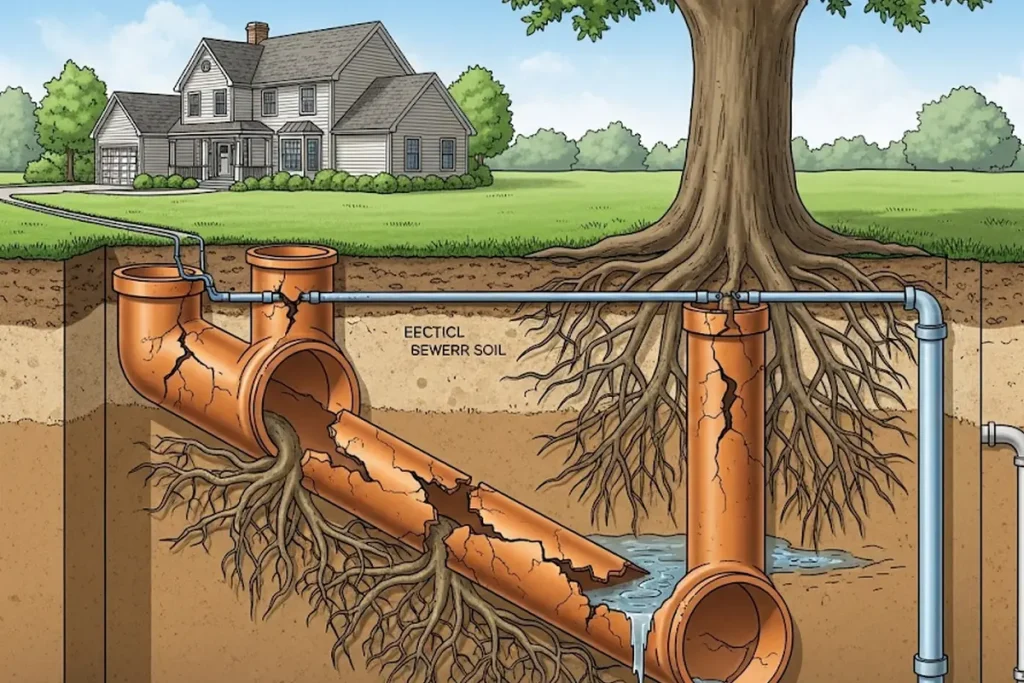
A Castro Valley couple’s dinner party ended with sewage flooding their basement last month. Their 1940s Craftsman home’s clay sewer pipes—80 years old and invaded by oak tree roots—had finally surrendered. The repair bill? $22,000.
They’re not alone.
Thousands of East Bay homeowners sit atop similar disasters, unaware their pre-1950 clay sewer laterals are failing underground. The Regional Private Sewer Lateral Ordinance requires EBMUD-area property owners to certify these aging pipes are “free of leaks and defects that allow rainwater and groundwater to enter the sanitary sewer system.”
But compliance certificates are just paperwork. The real story is underground.
When Clay Pipes Hit Their Expiration Date
Before 1950, clay was king for sewer pipes. Durable, affordable, chemical-resistant—these terracotta tubes seemed eternal.
They weren’t.
Think of your sewer lateral as ceramic coffee cups buried end-to-end. For 75 years, they’ve handled everything you’ve flushed. But clay doesn’t bend. When Bay Area soil shifts, when tree roots press, when earthquakes rumble—clay cracks.
Oakland’s Public Works Department sees it daily: “Laterals serving buildings constructed before the 1950s are often made of clay or concrete pipe that can crack, separate at the joints, or be damaged by root intrusion.”
Here’s what makes East Bay soil particularly brutal:
Our expansive clay soil swells during winter rains, then contracts in summer drought.
This seasonal expansion-contraction cycle creates relentless stress on rigid pipes. Meanwhile, those gorgeous neighborhood oaks and redwoods send roots seeking the moisture and nutrients concentrated in your sewer line.
One hairline crack becomes a root superhighway.
The Expanding Compliance Requirements
Multiple East Bay cities now demand PSL compliance certificates—and not just for home sales anymore.
Oakland, Emeryville, and Piedmont require certificates when:
- Selling property
- Remodeling over $100,000
- Changing building use
- Adding bedrooms or bathrooms
Albany and Alameda currently require certification only for the “upper” lateral (building to property line), though that’s still significant footage of aging pipe.
Why the strict requirements?
The California State Water Resources Control Board found that private laterals contribute 40-60% of infiltration into older sewer systems during storms. When your clay pipes crack, groundwater rushes in. Treatment plants overflow.
The San Francisco Bay Regional Water Quality Control Board documents what happens next: “untreated sewage can overflow from manholes, cleanouts, and pump stations, potentially reaching storm drains and surface waters.”
Every failing lateral pollutes our precious San Francisco Bay.
Your House Is Screaming for Help
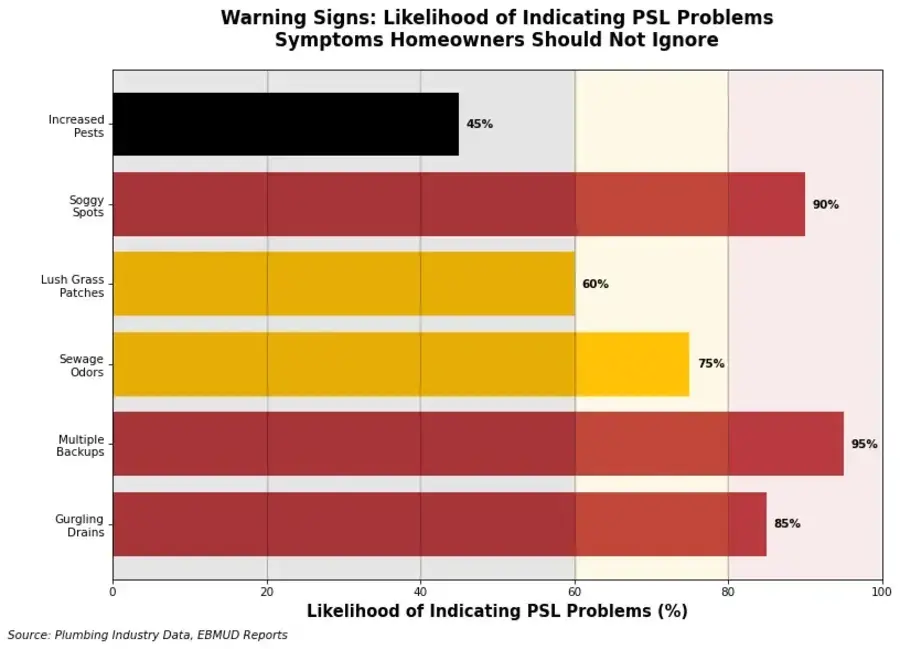
Those “quirks” you’ve normalized might be distress signals from pipes 10 feet underground.
The whispers come first.
That gurgling when you flush upstairs while the washer runs? Your pipes can’t handle normal flow—likely from root intrusion or pipe belly (sagging sections where waste accumulates).
The mysteriously lush grass patch that stays green through drought? You’re fertilizing with leaking sewage.
Then come the shouts.
When multiple drains back up simultaneously, your main lateral is compromised. If plunging your shower, toilet, and kitchen sink achieves nothing, the problem isn’t inside—it’s in that 75-year-old clay pipe under your driveway.
Sewage odors after rain mean cracks are venting gases. Increased rats, roaches, or flies? They’ve found those same cracks.
That perpetually soggy spot, even in August?
Active leakage.
What Modern Inspection Reveals
Today’s PSL inspection technology eliminates guesswork. High-resolution cameras navigate your entire lateral, recording every crack, root, and separation.
Inspectors hunt for four critical issues:
Structural integrity: Cracks, collapses, offset joints. Clay pipes often separate at connections, creating root entry points and sewage escape routes.
Root invasion severity: Minor root hairs might yield to hydro-jetting. Massive root balls demand replacement.
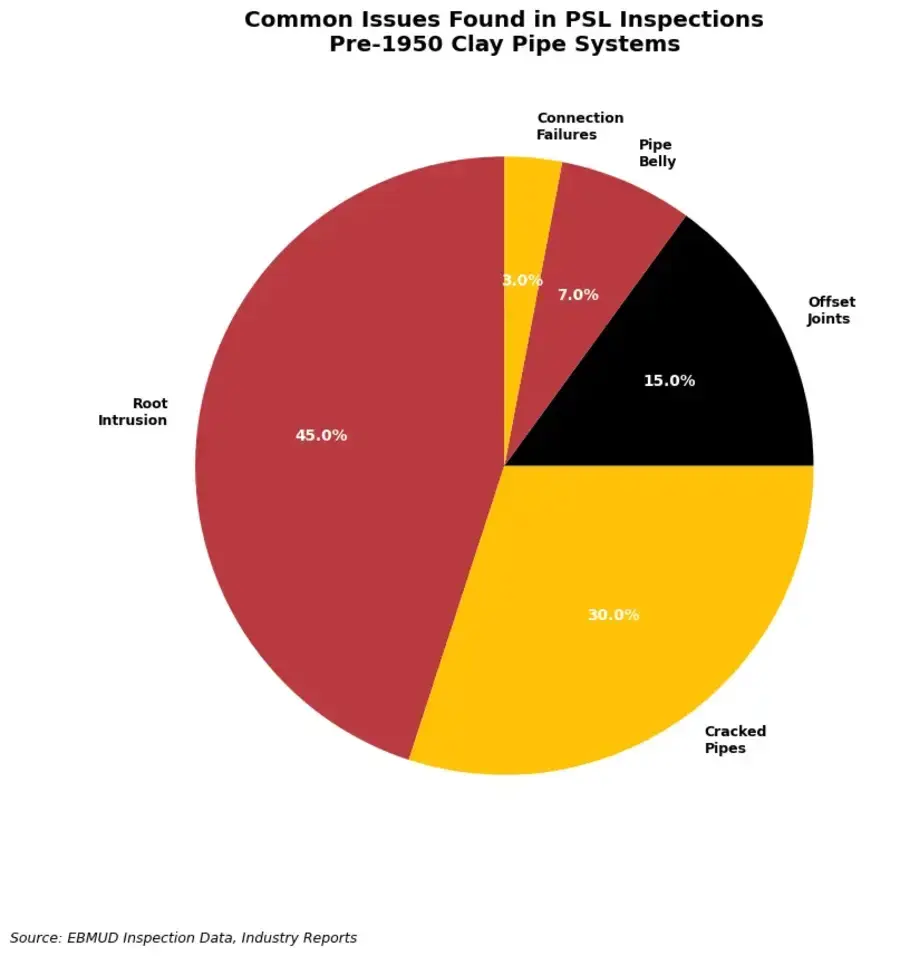
Pipe belly: Sagging sections trap waste, accelerating deterioration.
Connection failures: Transitions from clay to newer materials often fail first.
The 60-90 minute inspection produces video documentation—your roadmap for compliance or repair planning.
The Math Is Brutal
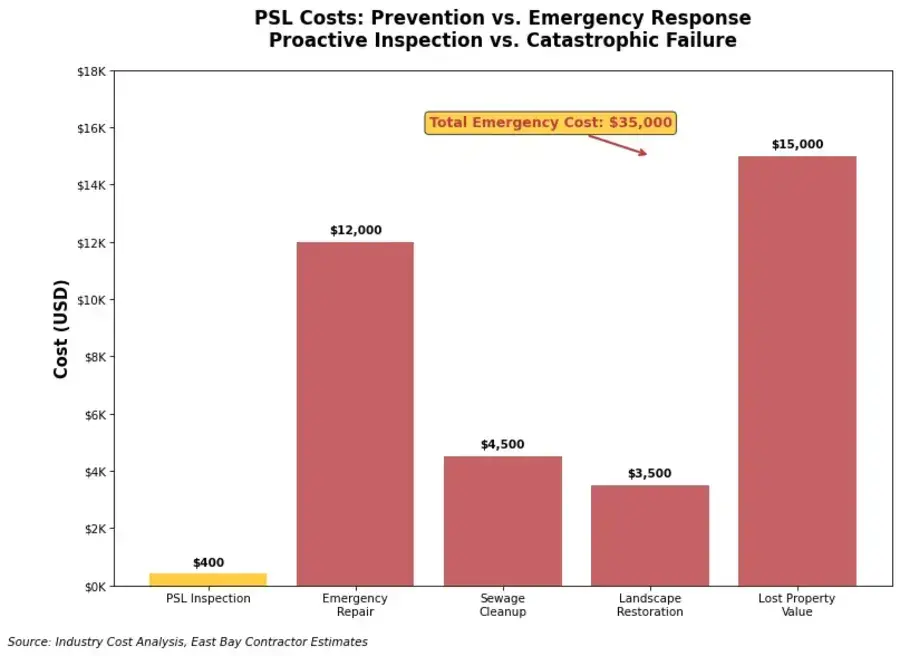
A PSL camera inspection costs $300-500.
Emergency repair when your lateral fails catastrophically costs:
- Emergency plumber (weekend/evening): $500-800
- Sewage cleanup: $2,000-7,000
- Traditional excavation/replacement: $8,000-15,000
- Landscape restoration: $2,000-5,000
- Lost negotiating power during home sale: $10,000-20,000
The EPA estimates 23,000-75,000 annual sewer overflows, excluding basement backups. Insurance might cover cleanup but rarely covers pipe repair—that’s “maintenance.”
When repairs are necessary, trenchless technology could save your yard. Instead of excavating everything, technicians pull new pipes through the old pathway, crushing clay as they go. This typically costs 30-50% less than excavation and completes in days, not weeks.
Prevention isn’t just cheaper—it’s controllable.
Act Before Choice Disappears
If your East Bay home predates 1950, your clay lateral has exceeded its lifespan. The question isn’t if it will fail, but when—and whether you’ll catch it first.
Consider the seasonal assault cycle:
Winter rains increase infiltration through existing cracks. Spring roots grow aggressively, seeking moisture as soil dries. Summer soil contraction stresses joints. Fall’s first rains test every weakness.
There’s no good season to ignore the problem.
Schedule your PSL inspection while you have options. Get compliance certificates before you need them. Protect your property, your investment, and the Bay.
That Castro Valley couple’s dinner party disaster has become the neighborhood’s cautionary tale.
Your 75-year-old pipes have earned retirement. Will you manage their exit, or will they manage you?